
These past two days were probably the most difficult, shocking, exciting and challenging days of my stay here in Nicaragua. It all started when Pauline asked me to be the interpreter for a cameraman from the States who was doing a documentary on a dental program in Granada this week. A group of dentists and dental surgeons organized an outreach program to give free dental treatment to as many people as possible. We would bring about a hundred kids from the school 'Pablo Antonio Cuadra' to see the dentist. For many of these kids this was probably their first time.

 On Thursday morning I accompanied Donald and the cameraman to the school where the first fifty kids were already waiting for us. The other group of fifty would go on Friday. With me as an interpreter, the cameraman interviewed two of the teachers and filmed the kids on the bus ready to go to the dentist, not knowing what was about to happen to them. The bus drove us to the center of Granada, where the dental program was set up in a private high school next to Casa de los Tres Mundos, one of the most significant buildings in Granada.
As soon as we entered the school, we took the kids to an empty classroom. The sight was impressive. At the entrance there was a small desk with two assistants trying to keep track of all the people waiting for check-ups. Two classrooms had been transformed into operating rooms and dental surgeons were already performing what looked like very complex procedures. In the last room there was a dentist doing the basic check-ups before sending people to the right line to wait for further treatment.

 If this sight was impressive and frightening to me, I can only imagine what it must have been like for the kids. There was no way the 'ayudantes' could handle this by themselves. Since Donald had to go back to the office, I ended up being in charge of the entire group.
 We divided the children into two groups: the ones older than 9 had to go to the adult side, while the others went to the pediatric side of the 'dental clinic'. Two volunteers were in charge on either side and together with an ayudante they made sure three kids at a time were escorted to their initial check-up. I walked from one side to the other trying to keep an overview of how many kids had already seen a dentist, and accompanying those who needed more treatment. I ended up in the operating room with different kids who needed a tooth pulled, something so frightening to them that some of them started crying and screaming. One of the boys was so afraid that he made sure I was not going to let go of him by digging his nails into my back.
The whole afternoon our students went in and out of the operating rooms to get their teeth fixed. Some had such bad problems, the doctors couldn't do anything to help them. At about 5PM the last kid went in for treatment. The bus was already gone with the other kids who had waited so long that games or toys were not exciting anymore. We sent the last kids home by taxi with their parents or teachers. The end of a very, very long day.
On Friday morning, we had to go through this all over again. At 7.30 in the morning I was in front of the school, together with a group of new volunteers and ayudantes, waiting for the bus to arrive. Another fifty kids were about to go through the same experience as the others. Of course, some of them had already heard from the others how terrifying it all was, so you could feel the fear among them. This time though we were better prepared for this, so I gave the volunteers a short briefing of what was about to happen before entering the school. By the time they were all inside the classroom, different volunteers and ayudantes were on both sides of the clinic, ready to play their parts. I put one person in charge of either side, which helped me a lot because I was able to keep a better overview of what was happening. The day started alright, but as the hours passed it became clear that many more kids needed further treatment. Although these were older kids then yesterday, most of them were sent to the paediatric side. The volunteers tried to keep the other kids busy with games and activities, but after hours of waiting even the funnest games were not fun anymore.


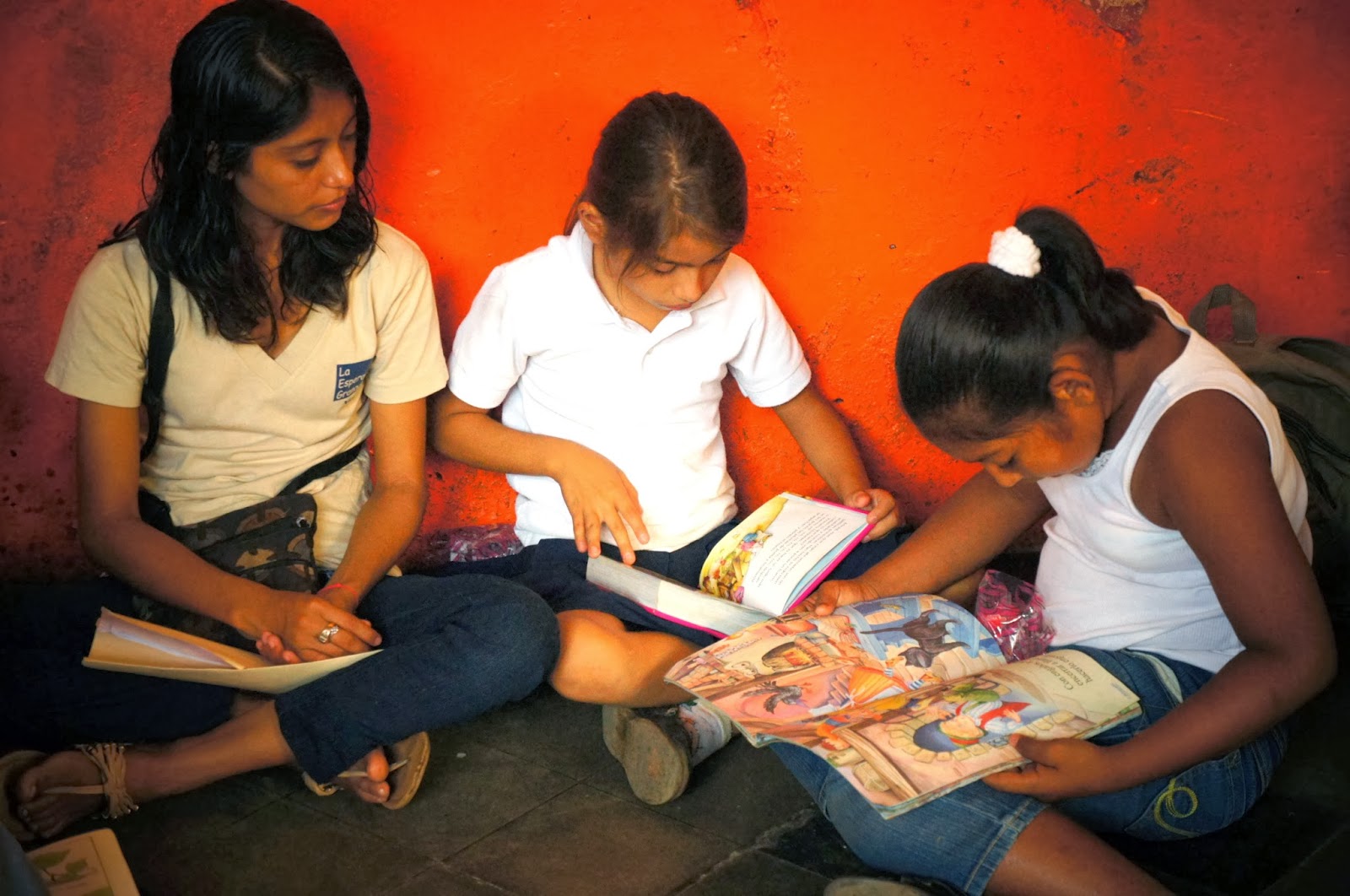


One girl needed such extensive treatment that I ended up staying with her all afternoon. They started working on her a little before noon, pulling out one of her baby teeth. Although I explained to the teacher that she needed further treatment after this, he sent her to the classroom and forgot all about it. The fear in her eyes when I walked back into the room to come get her, was indescribably painful to see. The surgeon explained she needed a root canal treatment on two molars on either side of her mouth. They ended up working on her till 3 p.m. The surgeon explained to her that if they hadn't done this treatment, she would have lost both teeth within a month. Now she will be able to keep them.
We gave the kids toothbrushes and explained to them how important it was to brush their teeth every day, but it became clear that this was not the kind of problem we would be able to solve in one day. These kids can't even afford to buy food, why would they spend money on a toothbrush and toothpaste?


